Customised Winter Pruning
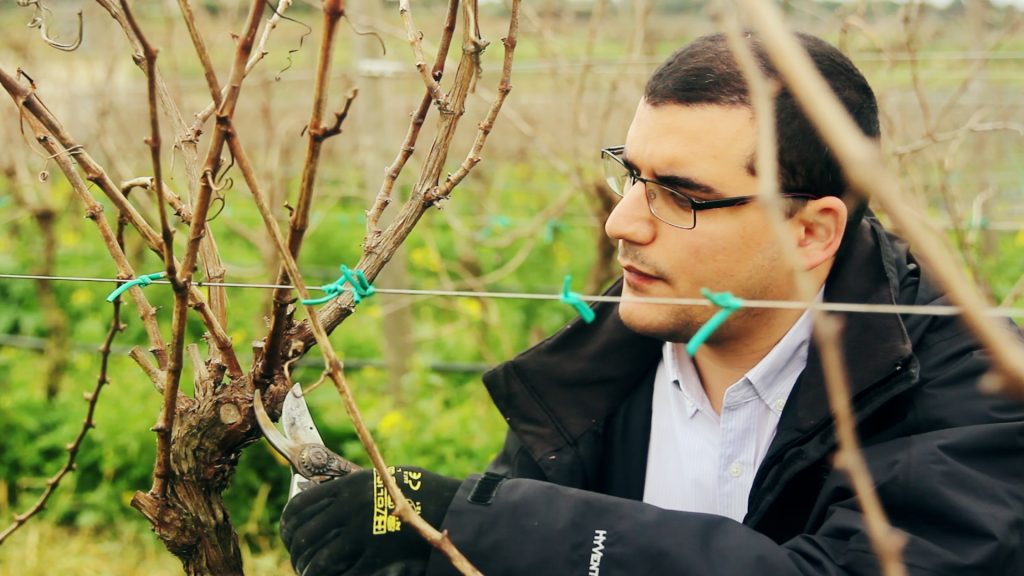 Winter pruning is now underway across Malta, carried out while the vines are fully dormant. It is one of the most decisive moments of the year, shaping both yield and quality long before the first buds appear.
A few days ago, walking vineyards with growers and observing winter work up close, I was reminded how much modern viticulture has become a game of precision rather than routine. At Emmanuel Delicata Winemaker, that thinking now extends fully into what is known as customised pruning.
Rather than applying a single pruning formula across the board, each vine is assessed individually, taking into account grape variety, age, soil composition, microclimate, and its IGT or DOK classification. The objective is simple but demanding: improve quality while reinforcing long term vineyard sustainability.
Sustainable viticulture, as defined in The Oxford Companion to Wine, seeks to avoid environmental degradation while maintaining economic viability. It echoes principles promoted by leading agricultural research bodies, where the focus is on managing today’s vines in a way that preserves their health, productivity, and balance, so that the same parcels can continue to yield high quality fruit for decades to come.
What sets sustainable viticulture apart from organic or biodynamic approaches is its reliance on the scientific method. The emphasis is on measured, minimal intervention, managing the vineyard as a complete system where soil, water, canopy growth, pests, and human input are carefully balanced.
Customised pruning plays a key role in this approach. Improved directional canopy growth reduces the need for sprays and fertilisation, while encouraging healthier vines and a clearer expression of varietal character. At the same time, growers are better positioned to reach their permitted IGT and DOK yields without compromising quality.
The real proof will come at harvest, when the 2026 grapes are picked in August and September. As winemaker Matthew Delicata puts it, “on a small island like ours, with all the limitations that brings, sustainable viticulture is not a choice. It is a necessity for growers, winemakers, and the future of Maltese wine.”
by Georges Meekers, Head of Marketing